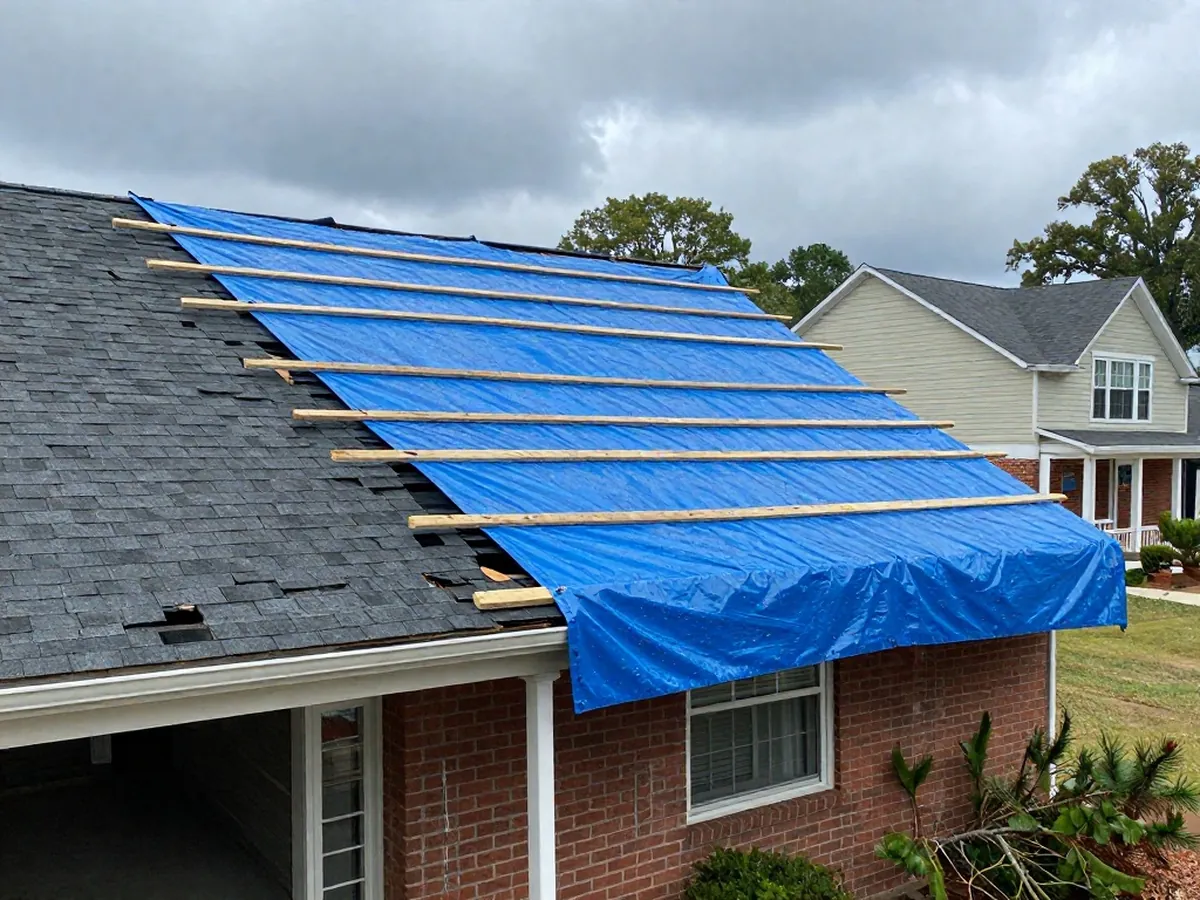
After a hard rain, a roof leak in Smyrna can show itself through damp attic insulation, a ceiling stain or water around a window frame. The stain may sit far from the spot where the water got in. Did the storm leave a wet room? Call (678) 679-5538 and describe where it showed up.
See the paired job: Storm damageRain, a failed pump or a seep in a Smyrna basement
Flooded Basement and Crawl Space in Smyrna, GA
In Smyrna, water in a basement or crawl space might trace back to heavy rain, a sump pump that quit, a cracked foundation or a plumbing line. Standing water in the lower level? Call (678) 679-5538 and give the depth and what you think caused it.
Checked 1 Nov 2026
Get out and get help if
- Water at outlets, the panel or appliances: stay out of the basement. Per CDC, anyone who would have to wade to reach the main switch calls an electrician instead.
- A gas smell: go outside, leave the switches alone, and from there phone 911 or the gas company, Atlanta Gas Light, at 877.427.4321. Keep fuel-burning pumps and generators out of the house.
- A floor drain pushing water up could mean sewage. Keep children away, touch none of it, and phone Smyrna's sewer line at (770) 431-2850.
- Walls that crack or bow, or a floor that sags above the water, mean staying out until a contractor or building inspector has examined the structure.
Cobb County notes
Creek flooding and drainage reports go to (770) 431-2850 under Smyrna's Public Works FAQ, with (770) 434-6666 after hours. The same page leaves detention and retention ponds to the property owner or the HOA.
In September 2024 Hurricane Helene left Cobb County with a National Weather Service radar estimate of 8 to 10 inches of rain. The service reported significant flash flooding, with roads and structures inundated along South Cobb Drive.
At the Atlanta airport station, NOAA's 1991 to 2020 normals count 14.9 days a year that bring an inch of rain or more, which makes a heavy-rain day an ordinary part of the calendar. Figures can differ at your address.
Stairs, a window well and a mattress on blocks
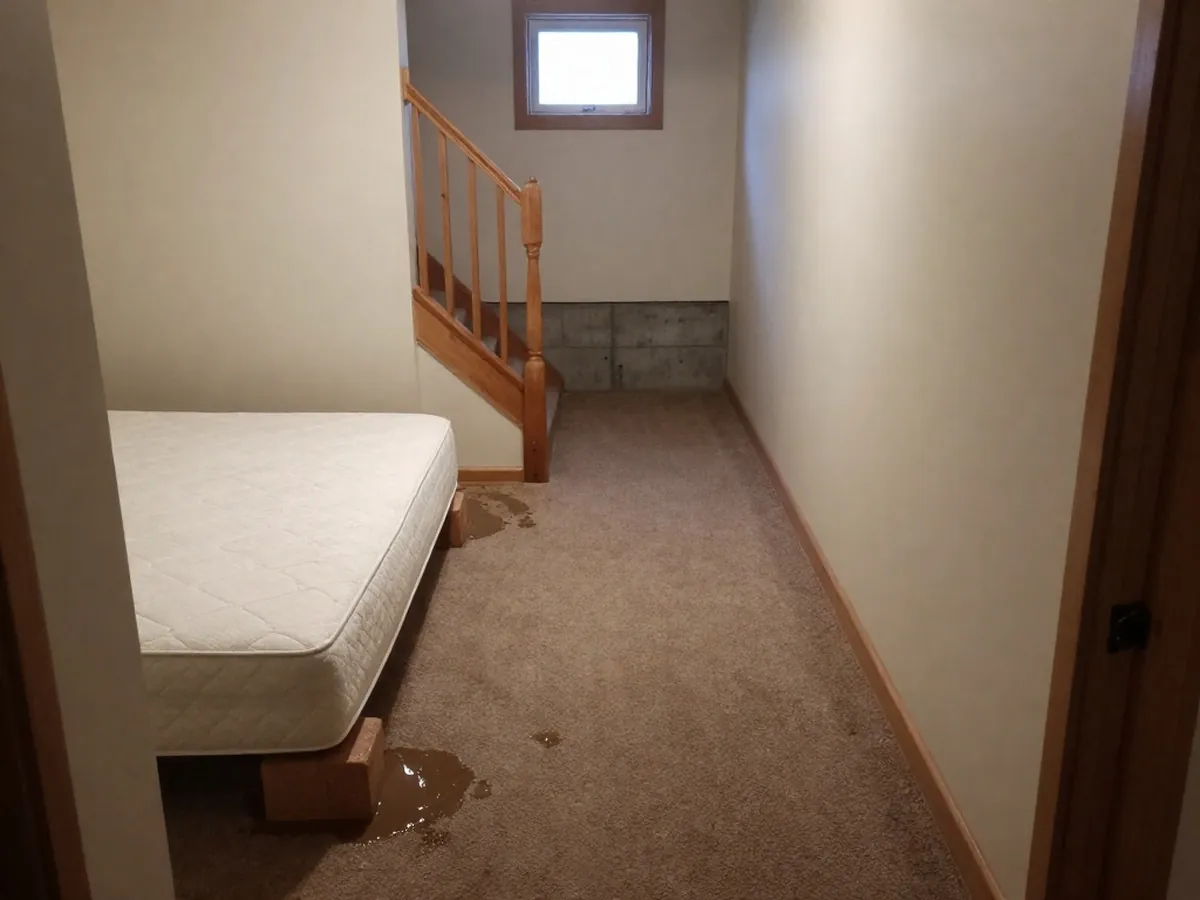
The basement in the photo has a wooden staircase with a handrail, a small ground-level window well high on the wall and a stretch of bare concrete foundation. A few inches of water covers the carpet, the baseboards are soaked and a mattress rests on blocks. Window wells and foundation walls are among the places water gets in.
Gather these first
Gather these from a dry spot before the call. Nothing here asks you to step into water, lift an appliance or open a wall.
- From outside, look at the gutters, downspouts and yard. Note whether water pools beside the foundation.
- Check where the downspouts empty. A University of Georgia checklist wants them emptying 2 to 3 feet from the house.
- If a sump pump is down there, listen from the top of the stairs for whether it runs. Never touch it while standing in water.
- Photograph the water line on walls and on stored boxes. Write down the date and how hard it rained.
Slab, sump pit and crawl space, in plain terms
The slab is the concrete floor. A sump pit collects water that seeps in, and a pump sends it outside. A crawl space is the low area under a floor, and CDC says it needs proper drainage to limit seepage and ventilation to dry out.
CDC also says roof and gutter water has to run off away from the house, and that the surrounding ground needs a slope away from it.
Put these to the contractor about a wet lower level
- Where did the water get in: a window well, a crack in the wall, a floor drain or a plumbing line?
- Is the pump working, and if it is not, who deals with it?
- How will readings check the slab, lower walls and framing?
- Which stored items, rugs and carpet are worth drying, and which are not?
- What about the crawl space: drainage, airflow and a second look later?
Mistakes that follow a wet basement
- Running a gas pump or generator indoors
- Per CDC, a gasoline engine never runs inside a basement or garage, and it sits well outside, 20 feet or more from any door, window or vent, since carbon monoxide builds up.
- Wading in to reach the breaker
- CDC's advice for a main switch behind standing water is to call an electrician.
- Leaving downspouts aimed at the wall
- CDC and the University of Georgia both want roof water carried away from the foundation.
Paperwork for pumping and repair work
Structural and interior demolition, and jobs involving two or more trades, are what Smyrna's Building Division lists as permit work. If the repair after a wet basement comes near any of those, (678) 631-5387 is the number to phone before work starts. See each town's rules for the others.
Often travels with
Rain in: Wet basements and storm leaks
Pages behind these facts
- Centers for Disease Control and Prevention, Safety Guidelines: Reentering Your Flooded Home (updated 24 Aug 2026)
- U.S. Environmental Protection Agency, Flood Cleanup to Protect Indoor Air and Your Health (updated 18 Mar 2026)
- City of Smyrna, Public Works FAQs
- City of Smyrna, Building Division
- National Weather Service Atlanta, County Impacts Associated with Hurricane Helene (2024)
- NOAA National Centers for Environmental Information, U.S. Climate Normals 1991-2020, annual and seasonal, Atlanta Hartsfield Intl Airport (USW00013874)
- University of Georgia Cooperative Extension, Home Maintenance Checklist, Circular 1082 (reviewed June 2021)
- Atlanta Gas Light, Emergency Information